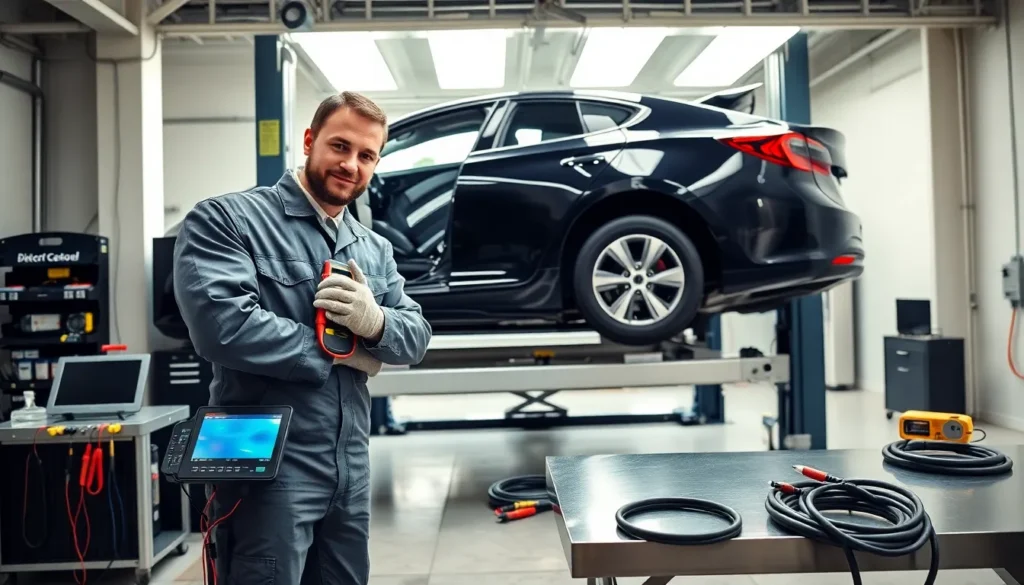
Electric vehicles tools have become essential equipment for anyone working on modern EVs. The shift from internal combustion engines to electric powertrains demands a completely different toolkit. Traditional wrenches and socket sets won’t cut it when dealing with high-voltage battery systems and sophisticated onboard computers.
Whether someone owns an EV at home or runs a professional auto shop, having the right electric vehicles tools makes all the difference. These specialized instruments protect workers from electrical hazards, ensure accurate diagnostics, and keep battery systems running at peak performance. This guide covers the must-have equipment that every EV owner and mechanic should consider adding to their collection.
Table of Contents
ToggleKey Takeaways
- Electric vehicles tools differ significantly from traditional automotive equipment, requiring specialized gear for high-voltage systems and battery maintenance.
- Diagnostic equipment like CAT III/IV rated multimeters, EV-specific OBD-II scanners, and thermal imaging cameras are essential for safe and accurate EV servicing.
- Insulated hand tools rated to 1,000V or higher, along with VDE certification, protect technicians from electrical shock during high-voltage repairs.
- Battery maintenance requires specialized electric vehicles tools including cell balancers, EVSE testers, and non-conductive coolant service equipment.
- Standard shop lifts may not safely support EVs—four-post lifts or reinforced platforms are recommended due to heavy, floor-mounted battery packs.
- Personal protective equipment such as Class 0 electrical gloves and face shields should always accompany insulated tools for maximum safety.
Diagnostic and Testing Equipment
Modern EVs rely heavily on electronic systems, so diagnostic tools sit at the top of any essential electric vehicles tools list. A quality OBD-II scanner with EV-specific capabilities reads battery health data, motor controller status, and charging system performance. Generic scanners often miss critical EV parameters, making specialized models worth the investment.
Multimeters rated for high-voltage DC systems are non-negotiable. Standard automotive multimeters typically max out at 600V, but EV battery packs can exceed 800V in newer models. CAT III or CAT IV rated multimeters handle these voltages safely and provide accurate readings.
Oscilloscopes help technicians analyze waveforms from inverters and motor controllers. These devices catch intermittent faults that simple voltage readings miss. Many shops now use tablet-based oscilloscopes that combine portability with professional-grade measurement capability.
Insulation resistance testers (megohmmeters) verify the integrity of high-voltage cable insulation. A compromised cable can create dangerous ground faults or fire hazards. Regular testing with these electric vehicles tools catches problems before they become serious safety issues.
Thermal imaging cameras round out the diagnostic toolkit. They spot overheating connections, failing battery cells, and stressed components without physical contact. Hot spots in an EV often signal impending failures that visual inspection would miss entirely.
Charging and Battery Maintenance Tools
Battery systems represent the heart of any EV, and proper maintenance requires specific electric vehicles tools. Portable EVSE (Electric Vehicle Supply Equipment) testers verify that charging stations deliver correct voltage, amperage, and ground fault protection. Faulty chargers can damage expensive battery packs or create safety hazards.
Battery cell balancers help maintain uniform charge levels across individual cells. Imbalanced cells reduce range and accelerate degradation. Professional-grade balancers work with various battery chemistries including lithium-ion, lithium iron phosphate, and solid-state configurations.
Coolant system service equipment handles the thermal management systems that keep batteries at optimal temperatures. Unlike traditional engine coolant, EV battery coolant must be non-conductive. Dedicated flush and fill machines prevent cross-contamination and ensure proper coolant specifications.
Battery lift tables safely position heavy battery packs during removal and installation. A Tesla Model S battery weighs over 1,000 pounds, making manual handling impossible. These specialized electric vehicles tools include adjustable platforms that match various pack dimensions.
Charge port diagnostic tools test the communication between vehicles and charging stations. CCS, CHAdeMO, and Tesla connectors each have unique protocols. Proper testing equipment simulates charging station signals to isolate vehicle-side faults from infrastructure problems.
Insulated Hand Tools for High-Voltage Safety
Working on EV systems demands insulated hand tools rated to 1,000V or higher. These electric vehicles tools feature multiple layers of insulation that prevent electrical shock during high-voltage service procedures. Standard chrome-plated tools conduct electricity and pose serious injury risks.
VDE-certified tool sets meet international safety standards for electrical work. The certification requires tools to withstand 10,000V during testing, providing a substantial safety margin for typical EV voltages. Color-coded red and yellow handles indicate proper insulation ratings.
Insulated socket sets cover the most common fastener sizes found in EV battery enclosures and motor assemblies. Manufacturers produce both metric and SAE configurations. Torque-limiting versions prevent over-tightening of sensitive electrical connections.
Insulated screwdrivers, pliers, and cutters complete the basic hand tool collection. Cable cutters with rated insulation safely sever high-voltage wiring during emergency situations or component replacement. These electric vehicles tools require regular inspection for cracks, wear, or contamination that could compromise their protective properties.
Personal protective equipment works alongside insulated tools. Class 0 electrical gloves rated to 1,000V AC provide an additional safety layer. Glove testing equipment verifies insulation integrity before each use. Face shields protect against arc flash hazards during certain service procedures.
Specialized Lifting and Service Equipment
EVs present unique challenges for traditional shop equipment. Their weight distribution differs significantly from conventional vehicles due to floor-mounted battery packs. Standard two-post lifts may not support EVs safely without modification or replacement.
Four-post lifts with reinforced platforms handle the concentrated loads that EV batteries create. These electric vehicles tools distribute weight more evenly and provide stable platforms for undercar service. Many newer models include integrated battery lift provisions.
Scissor lifts and pit systems offer alternative approaches for shops with space constraints. Low-profile scissor lifts slide under vehicles with minimal ground clearance. In-ground pits eliminate lifting concerns entirely, though they require significant facility investment.
Transmission jacks adapted for battery service support heavy packs during removal. Adjustable cradles accommodate various battery shapes and mounting configurations. Some specialized electric vehicles tools include integrated tilting functions for precise positioning.
Wheel alignment equipment calibrated for EV specifications ensures accurate suspension geometry. Many EVs have different ride heights and weight characteristics that affect alignment readings. Updated databases and EV-specific mounting adapters keep alignment results accurate.